


In a world rushing toward the next big thing, there’s something quietly powerful about a place that takes its time, especially when that place is 300 years old. Welcome to the Galle Fort Hotel, an architectural jewel nestled within the UNESCO World Heritage Site of Galle Fort, on Sri Lanka’s southern coast. This boutique property, framed by stone ramparts and the scent of frangipani, is a living storybook of colonial history, cultural reinvention, and understated luxury.
The Galle Fort Hotel is housed in a majestic Dutch mansion built in the 18th century, which was once a warehouse. Later, it became the private residence of a well-known gem merchant family during British rule. In the decades that followed, it served as a Royal Air Force barracks and, at one point, even hosted a cricket pitch in its courtyard. Each chapter shaped the character of the building long before it was reimagined as the hospitality landmark it is today.
Restoring the Past, Authentically
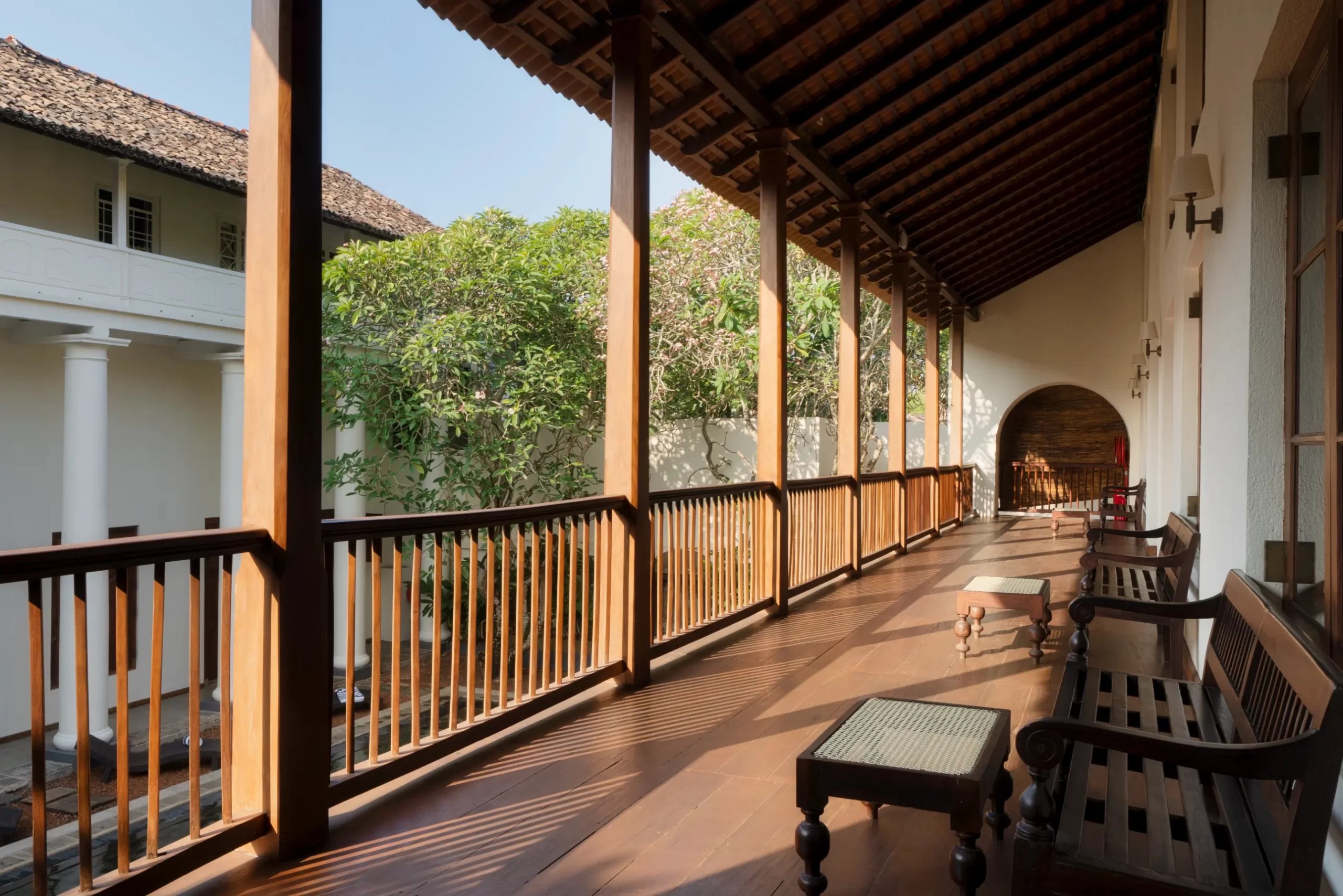
The restoration of the Galle Fort Hotel was undertaken with precision and care, under the guidance of the Sri Lankan Ministry of Archaeology. Every effort was made to retain the structure’s original soul, from its thick Dutch-built walls and weather-worn shutters to its gracefully arched Palladian colonnades. A process that was done with reverence.
Sri Lankan architect Channa Daswatte, known for his deep sensitivity to heritage architecture, led the project’s design evolution. His approach was not to reinvent, but to reveal the building’s many lives that speak through carefully considered interventions. Alongside expert restorers and heritage specialists, he worked to preserve the integrity of the space while gently ushering it into a new chapter. One of the standout architectural features of the property is the Palladian colonnade veranda.
Designed with Intention
Interior decorator Eranga Tennakoon curated the hotel’s décor. Each suite and shared space is furnished with carefully selected pieces. For instance, antique chests from the colonial period, vintage canopy beds with hand-carved headboards, aged teak chairs, burnished mirrors, and brass accents that glint subtly in the afternoon light. This careful curation extends beyond the suites and into the shared spaces: the softly lit hallways, the reading nooks tucked behind wooden screens, and the central frangipani courtyard that guests often describe as the soul of the property.
Suites That Tell a Story
Arranged around a serene, frangipani-lined courtyard, the hotel features eleven suites, each with its own distinct personality. Rather than a uniform design approach, every suite draws from a different layer of Galle’s multicultural past.
The Loft Suites echo the mercantile spirit of the Dutch East India Company through bold textures and nautical-inspired detailing. The Garden Suite, with its nod to Dutch botanical illustrations, feels softer, more introspective, rooted in nature, filled with light and evocative. The Admiral Cheng Ho Suite draws from Galle’s links to the Far East, incorporating Chinese furniture and motifs that speak to centuries of maritime exchange. Even the Garden Room, with its hand-painted mural by a local artist, bridges past and present in a way that feels fresh yet deeply respectful of place.
Then the Grand Apartment Suite is expansive, airy, and bathed in natural light. Original teak floors, lofty ceilings, and vintage furnishings create an atmosphere of refined calm, ideal for long stays or travellers seeking privacy with presence.
A Spirit Forward: Ropewalk and the Arrack Revival
Further deepening its connection to local culture, the hotel is home to Ropewalk, the world’s first bar dedicated entirely to arrack, Sri Lanka’s iconic native spirit. With a bold ‘arrack wall’, carefully curated selection, and inventive, island-inspired cocktail menu, Ropewalk has become a pioneer in redefining the country’s beverage scene. It is the world’s first to be entirely dedicated to arrack, the island’s age-old native spirit made from the sap of coconut flowers. Once confined to local taverns and home rituals, arrack here is elevated, celebrated, and completely reimagined.
The iconic arrack wall, a curated showcase of over 70 varieties from across the country. The visual drama of the display is matched only by the creativity of the cocktail menu, which draws inspiration from Sri Lanka’s tropical bounty like cinnamon, tamarind, jackfruit, and island spices woven into bold, contemporary concoctions.


Dining That Honours Local and Global Palates

The hotel’s gourmet restaurant offers a menu grounded in Western-fusion cuisine, with a strong emphasis on locally sourced ingredients. The kitchen works closely with local fishermen and farmers, drawing in seafood fresh from the southern coast and produce that reflects the season’s best. Guests can choose to dine within the softly lit interiors or in the open courtyard, where frangipani trees cast long shadows under the stars and conversations stretch into the night. Whether it’s a leisurely breakfast, a sundowner tasting menu, or an unhurried evening meal, dining here feels less like a formal occasion and more like a beautifully curated ritual.
A Vision of Experiential Luxury
At the heart of the Galle Fort Hotel’s transformation is Amrit Rajaratnam, founder of Maitland & Knox, the experiential luxury company behind the property. For Rajaratnam, the vision was always clear; this wasn’t just about restoring a heritage building, but about creating layered, sensorial spaces that honour the past while elevating the guest experience. He viewed the hotel as one of the finest surviving examples of Dutch architecture within the Fort and believed its history, with influences from the spice trade and the Dutch East India Company, offered a rich design language from which to build.
Shayan Kannangara, Director at Maitland & Knox, shares a similar conviction. He sees Sri Lanka as an ideal destination for boutique hospitality, particularly for high net worth travellers who value authenticity and personalisation.
From its architecture and design to its soulfully crafted guest experiences, the Galle Fort Hotel represents more than just a heritage revival. It is a quiet revolution in luxury, one that replaces excess with intention and gloss with grounded beauty.


